Review: Dog SVG Design, My Children Bark for Embroidery
As a designer who spends more time at the hoop than away from it, I approach every new digital embroidery file with a mix of curiosity and skepticism. We have all seen designs that look fantastic on a screen but turn into a tangled mess of thread once the machine starts running. Recently, I took a close look at the Dog SVG Design, My Children Bark to see if it holds up under the needle for real-world craft business applications. This isn't just about whether the image is cute; it is about whether it translates effectively into a finished product that a customer will love and wear proudly.
First Impressions and Visual Personality
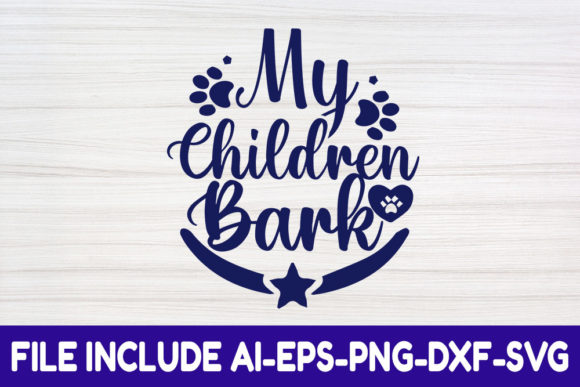
When I first opened the files included in the zip—specifically the SVG format for cutting machines and the EPS format for vector editing—the immediate vibe was playful and unapologetically honest. The phrase "My children bark" paired with dog imagery creates an instant emotional connection for pet owners. It taps into that specific niche of handmade product buyers who consider their pets to be their actual family. The layout appears clean, which is crucial. In the world of Crafts and Graphics, clutter is the enemy of longevity. A design that is too busy often dates quickly or becomes illegible when scaled down.
The visual personality here suggests a casual, lifestyle-oriented aesthetic. It feels right at home on a weekend sweatshirt embroidery project or a canvas tote bag design. It does not scream "formal event," which is a good thing; it invites warmth and humor. For an Etsy seller or small shop owner, this kind of relatable messaging is gold. It stops the scroll because it speaks directly to the identity of the buyer.
Real-World Application: The Custom Tote Test
To truly evaluate this embroidery project, I imagined a specific scenario: a custom order for a local dog walker who needed branded merchandise. She wanted something durable for her daily rounds but fun enough to spark conversations at the park. I visualized applying this design to a heavy-weight canvas tote bag. The structure of the text and the accompanying graphics seem robust enough to handle the texture of canvas without getting lost.
If I were stitching this onto a custom apparel item like a French terry sweatshirt, the design's simplicity would work in its favor. Complex details often get swallowed by the loops of fleece or terry cloth, but a bold statement like this maintains its clarity. For baby embroidery, perhaps on a onesie or a nursery pillow cover, the sentiment is perfect. Parents love declaring their fur babies' status, and this design delivers that message without being overly intricate, which is safer for delicate baby fabrics.
Versatility Across Products
The strength of this asset lies in its adaptability. Because you receive multiple formats including PNG for mockups and DXF for cutters, it serves various stages of production. You can use the PNG to create a printable mockup for your online store before you even stitch a single thread. This is vital for digital product sellers and creative entrepreneurs who need to visualize the finished product to gauge market interest.
Beyond apparel, consider the potential for an embroidered patch. If digitized correctly with a satin stitch border, this could become a high-value add-on for jackets or hats. For holiday embroidery gifts, such as a kitchen towel for a dog-loving hostess, the design offers a personal touch that feels thoughtful rather than generic. It fits seamlessly into categories like personalized gift items, where the emotional resonance drives the sale more than the technical complexity.
Technical Considerations and Stitching Challenges
However, no review is complete without addressing the technical realities of turning a vector graphic into a machine embroidery design. While the source files (SVG, EPS, DXF) are ready for cutting or printing, remember that these are not native embroidery files unless specified otherwise by the vendor. If you are using this as a reference to digitize yourself, or if it includes an embroidery conversion, you must pay attention to stitch density.
Text-based designs can be tricky. The lettering in "My children bark" needs to be wide enough to support a satin stitch without collapsing. If the letters are too thin, they may require a running stitch or a specialized column stitch, which changes the visual weight of the design. On dark fabrics, you must ensure the thread colors provide sufficient contrast. A light thread on a black hoodie looks striking, but if the underlying stabilizer shows through gaps in the stitching, it ruins the professional look.
Placement matters immensely. On curved surfaces like caps, a wide design might distort. You would need to test this on a scrap piece of similar fabric first. Always check the recommended hoop size before starting. Trying to force a large design into a small hoop leads to registration errors and frustration. Furthermore, for items that will undergo frequent washing, like custom apparel or kitchen towels, the density of the fill stitches must be balanced. Too dense, and the fabric puckers; too sparse, and the design wears out quickly.
Advice for Commercial Use and Quality Control
For those running a small shop product line or acting as an Etsy seller, consistency is key to building brand consistency and customer trust. Before listing this as a commercial embroidery option, I strongly advise testing the design on the exact fabric you intend to sell. What looks good on cotton might behave differently on a polyester blend.
Inspect the small details closely. Are there tiny elements that might break off after a few washes? Is the spacing between the dog graphic and the text sufficient to prevent thread bridging? These are the questions that separate amateur hobbyists from professional apparel decorators. Using the proper stabilizer is non-negotiable here. A cut-away stabilizer is often safer for stretchy fabrics like sweatshirts to prevent distortion over time, whereas a tear-away might suffice for stable woven tote bags.
Finally, always confirm the licensing terms. Just because you purchased the design assets does not automatically grant unlimited commercial embroidery rights. Ensure you are cleared to sell finished items or digital derivatives. This protects your craft business from legal issues and ensures you can invest confidently in marketing your new holiday gifts or boutique branding materials.
In conclusion, the Dog SVG Design, My Children Bark offers a charming, market-ready concept that fits well within the current trends of pet-centric decor and fashion. With careful attention to digitization specifics, fabric selection, and stabilization, it has the potential to become a staple in your catalog of personalized products. It is a reminder that sometimes the simplest messages, executed with precision, create the most impactful handmade presentation.