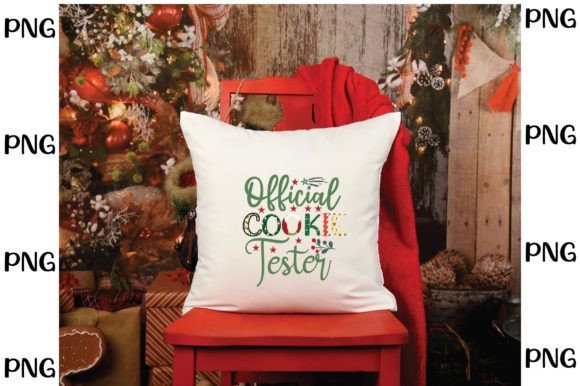
Official Cookie Tester Sublimation Svg D Review
As a designer who spends more time staring at stitch maps than most people care to admit, I approach every new machine embroidery design with a mix of excitement and skepticism. We have all been there: you buy a file that looks vibrant on the screen, only to find out it turns into a puckered mess once the needle hits the fabric. That is why I took a close look at the Official Cookie Tester Sublimation Svg D. While the product listing categorizes this under Crafts and labels it as a Graphics item intended for sublimation, my mind immediately went to how this could translate into a tangible, stitched handmade product.
The first thing that strikes you about this design is its playful, holiday-centric mood. It captures that cozy, slightly chaotic energy of Christmas baking season perfectly. The visual personality suggests warmth and humor, making it an ideal candidate for holiday embroidery projects. However, because the source file is described as a high-resolution PNG meant for printing rather than a native embroidery file, there are specific considerations we need to address before hooping up your machine.
From Screen to Stitch: A Real-World Scenario
Let's imagine a real-life scenario where this design shines. Picture a small boutique owner preparing for the December rush. They want to create a line of limited-edition kitchen towels and aprons for local gift shops. The Official Cookie Tester Sublimation Svg D fits this narrative beautifully. Envision this graphic digitized or applied as a patch onto a linen tea towel. The colorful nature of the original 300 dpi image suggests that if you were to recreate this using thread, you would need a robust palette of thread colors to maintain that cheerful vibrancy.
If I were executing this as a custom project, I would likely lean towards an applique design approach or a dense fill stitch strategy to mimic the solid color blocks seen in the sublimation preview. For a sweatshirt embroidery project, this design would add a fun, conversational element to a plain hoodie. Customers love items that tell a story or make a joke, and a "Cookie Tester" motif definitely sparks a smile. It elevates a standard garment into a personalized gift that feels thoughtful and specific.
Navigating Fabric and Texture Challenges
Here is where practical judgment comes into play. Since the original asset is a raster image (PNG) optimized for flat printing, translating it to embroidery requires careful attention to stitch density. If you are working with a thin fabric like a lightweight cotton tee, a heavy saturation of stitches could cause the material to warp or pucker. In such cases, I strongly recommend using a cut-away stabilizer to provide lasting support, especially since these items might endure frequent washing.
Textured fabrics present another hurdle. If you attempt this on a waffle-weave towel or a thick terrycloth apron, the fine details of the graphic might get lost in the loops of the fabric. For these surfaces, simplifying the design or increasing the scale is crucial. Furthermore, if you are considering this for a curved surface like a cap, you must ensure the design elements are not too wide or intricate near the edges, as the curvature can distort the final look. Always test your hoop size compatibility; while the print size is listed at 12"x12", your embroidery hoop will likely be smaller, requiring you to scale the design down without losing legibility.
Commercial Viability and Brand Consistency
For Etsy sellers and creative entrepreneurs, the value of a design lies not just in its cuteness, but in its ability to build brand trust. Using a high-quality motif like the Official Cookie Tester Sublimation Svg D as inspiration for your stitched goods can enhance your small shop product lineup. However, clarity is key. If the text within the design is small, ensure that your digitizing process uses clean satin stitch or sharp running stitch outlines to keep letters readable. Blurry text on a finished product can make a business look amateurish.
This design also holds potential for commercial embroidery beyond just apparel. Think about embroidered patches. Creating a woven or merrow-edge patch based on this graphic could result in a highly sellable design asset. Patches are versatile; they can be ironed onto jackets, bags, or hats, giving customers multiple ways to enjoy the art. When creating printable mockup images for your online store, ensure the digital representation matches the texture and sheen of the actual thread work to manage customer expectations accurately.
Essential Designer Notes for Execution
Before committing to a production run, here are my top recommendations for working with this type of graphic:
- Test on Scrap First: Never skip the trial run. Stitch the design on a scrap piece of the exact fabric you intend to use to check for registration issues or tension problems.
- Check Color Contrast: Ensure your chosen thread colors pop against the fabric background. A dark thread on a dark shirt might look sophisticated, but it could also render the design invisible from a distance.
- Review Density: If digitizing this yourself, avoid overly dense fill areas that create stiffness. The goal is a soft finished product that drapes well.
- Verify Licensing: Since this is marketed as a sublimation graphic, double-check the license terms before selling embroidered versions. Some graphic licenses cover printing but restrict physical reproduction via stitching.
- Inspect Small Details: Tiny elements that print easily at 300 dpi may not stitch well. You may need to merge small islands of color or remove microscopic details that the needle cannot capture.
Ultimately, the Official Cookie Tester Sublimation Svg D offers a charming foundation for festive creations. Whether you are making a tote bag design for a holiday market or a cute piece of baby embroidery for a shower gift, the potential is there. It reminds us that great embroidery isn't just about the machine; it's about the designer's ability to adapt a visual concept into a tactile reality. By respecting the limitations of the medium and planning your approach to fabric and stabilization, you can turn this colorful graphic into a standout piece of wearable art.
Remember, the difference between a good project and a great one often lies in the preparation. Take the time to understand how the colors interact, how the stitches lay, and how the final item will feel in the hand. That level of care is what turns a simple Crafts project into a cherished keepsake.